Showing posts with label Black History Month. Show all posts

Tuesday, February 5, 2013

Black History Month No. 5: 12 Cool Things to Know About BHM and Hank Aaron, too.

So, wow, not being a sporty person, I learned a lot about Hank Aaron, who turns 79 years old today, that I never knew before. Very cool guy.

 "Failure is a part of success." 

"My motto was always to keep swinging. 
Whether I was in a slump or feeling badly
 or having trouble off the field, 
the only thing to do was keep swinging."

Hank Aaron


Dr. Carter G. Woodson, historian

"The thought of the inferiority of the Negro 
is drilled into hime in almost every class he enters 
and in almost every book he studies." 


Henry Louis "Hank" Aaron


1. So, long before February was designated BLACK HISTORY MONTH,  the boy baby who'd grow up to be known as Major League Baseball player, Hammerin' Hank Aaron was born on the 5th day of it, in Mobile, Alabama, down on the Gulf of Mexico.


2. In the beginning, in 1926, BHM was conceived as 'Negro History Week."  The 2nd week of February, as a matter of fact, in which a pair of notable winter babies were born: Frederick Douglass and Abraham Lincoln.

3. Whose idea was it? Really, a remarkable individual, a proud black man, and passionate historian, Dr. Carter Godwin Woodson.      

4. Dr. Woodson, who rec'd his Ph.D. (in history) from Harvard University in 1912, pioneered the idea - revolutionary for his timethat the history of African Americans was worthy of deep, scholarly attention. 

5.  Four years after Dr. Woodson died (3 April, 1950), Hank Aaron of Alabama made his Major League debut with the Milwaukee Braves.

6. Mr. Aaron started out his baseball career in the Negro American League, in the Indianapolis Clowns.   Knowing well that you gotta be a sturdy talented individual to be a clown, I'm thinking that that's a rather crummy/demeaning team name. 

7. In 1976, 50 yrs after the 1st Negro History Week, the first official African American History Month was celebrated.  

8. By that year, the U.S.A. Bicentennial, Hank Aaron was wrapping up his nearly 23 year-long career with the Atlanta Braves.  

9. 755 career home runs!  

10. And a big stink it was back on April 8, 1974, when Hank hit No. 715. Why? It meant that Mr. Aaron, who'd been getting lots of support as well as racist death threats, had broken the Babe's long-standing home run record. 

11. Never mind that one of his nicknames was "Bad Henry;" Hank Aaron was and is a gentleman athlete and active in the long struggle for fairness and equality, listed not only in the Civil Rights Hall of Fame,

12. but as of 1982, you'll find Hank "the Hammer" Aaron listed among the greats in baseball's Hall of Fame.  Wanna read more about him? Check out his autobiography, I Had a Hammer. 
Aim some happy birthday vibes in his direction and pay some attention to Black History Month.  You'll discover some REMARKABLE stories about your fellow Americans. 


Sunday, February 3, 2013

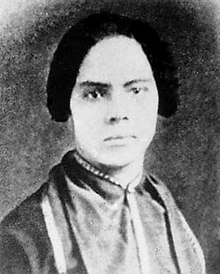
Black History Month No. 3: 12 Cool Things to Know About Mary Ann Shadd Cary

       Okay, so I'd never heard of Mary Ann Shadd Cary until I had the privilege of writing and illustrating the book Rabble Rousers: Twenty Women Who Mad a Difference (pub'd by Dutton in 2003. One of them was Sojourner Truth, about whom I wrote yesterday.)  In learning about Mrs. Cary, honored I was to know of this valiant, stubborn lady. Honored I am to acquaint others with the fact that she lived.


"It's better to wear out than to rust out."

"Self-reliance is the Fine Road to Independence."

Mary Ann Shadd Cary  1823 ~ 1893
I find myself picturing her smiling and speaking, don't you?

1. Mary Ann's parents, Abraham and Harriet Shadd, were free black citizens of Wilmington, Delaware and big deals in the Underground Railroad: a very brave undertaking in their America. Mary Ann was the first of their 13 children.

2. When Mary Ann was only 16 years old, she used the education she'd received from Pennsylvania Quakers to start a school. Just think of that.  Who were her students? African American children. As in most places in the Land of Liberty, there was precious little equality and fairness for people of color, education-wise and otherwise. 

3. When Mary Ann was 27, the U.S. Congress came up with the Compromise of 1850 as a way to calm things down between pro- and anti-slavery Americans. Part of the legislation was the Fugitive Slave Act: Runaway slaves, who'd made it to the northern states could be arrested and sent back to their owners down South. As a result, any person of color could be captured, detained, and sent into servitude. Thousands of African Americans fled to Canada. That's what Mary Ann Shadd did, along with her brother, Isaac.  

4. And what did she do when she got there? She taught, she wrote, made speeches, founded an integrated school (in Windsor, Ontario), and in 1854, Miss Shadd began a newspaper, thus becoming North America's  FIRST African American woman publisher.

5. Ms. Shadd's Provincial Freeman of Toronto, Canada was full of information for blacks looking to build new lives in the far, free North. Moreover the pages of this weekly paper were devoted to writings on the abolition of the wicked practice of slavery. 

6. In 1856, Mary Ann Shadd married Thomas Cary. Together they had a son and a daughter, Linton and Sarah.  Thomas passed away in 1860.

7. Mary Ann Shadd Cary moved to Washington, DC. When this working mother wasn't teaching or serving as a school principal, she was recruiting black soldiers for the Union Army.

8. After the Civil War and the final abolition of slavery, Mrs. Cary became the FIRST woman of color to enter the law school of Howard University, in 1869. 

Charlotte E. Ray, 1850 ~ 1911
9. Upon graduating, Mary Ann Shadd Cary was the second female of her race (after New Yorker, Charlotte E. Ray, in 1872) to obtain a law degree, in fact, one of the first U.S. females to do so, regardless of color.

10. Mrs. Cary applied her terrific energy to winning U.S. women the right to vote, to fully participate in civic life of their nation. 

11. To that end, Mrs. Cary founded the Colored Women's Progressive Franchise Association in 1880.

12. On June 5, 1893, Mary Ann Shadd Cary, educator, abolitionist, political dissident and activist, journalist, lawyer, and mom, died of cancer, having used her life and intellect to the fullest. 


Saturday, February 2, 2013

BLACK HISTORY MONTH No. 2: 12 Things to Know About Sojourner Truth

"Truth is powerful and it prevails."

"I am not going to die;
 I'm going home like a shooting star."

"If women want any rights 
more than they's got, 
why don't they just take 'em 
and not be talking about it."

"Ain't I a woman?"

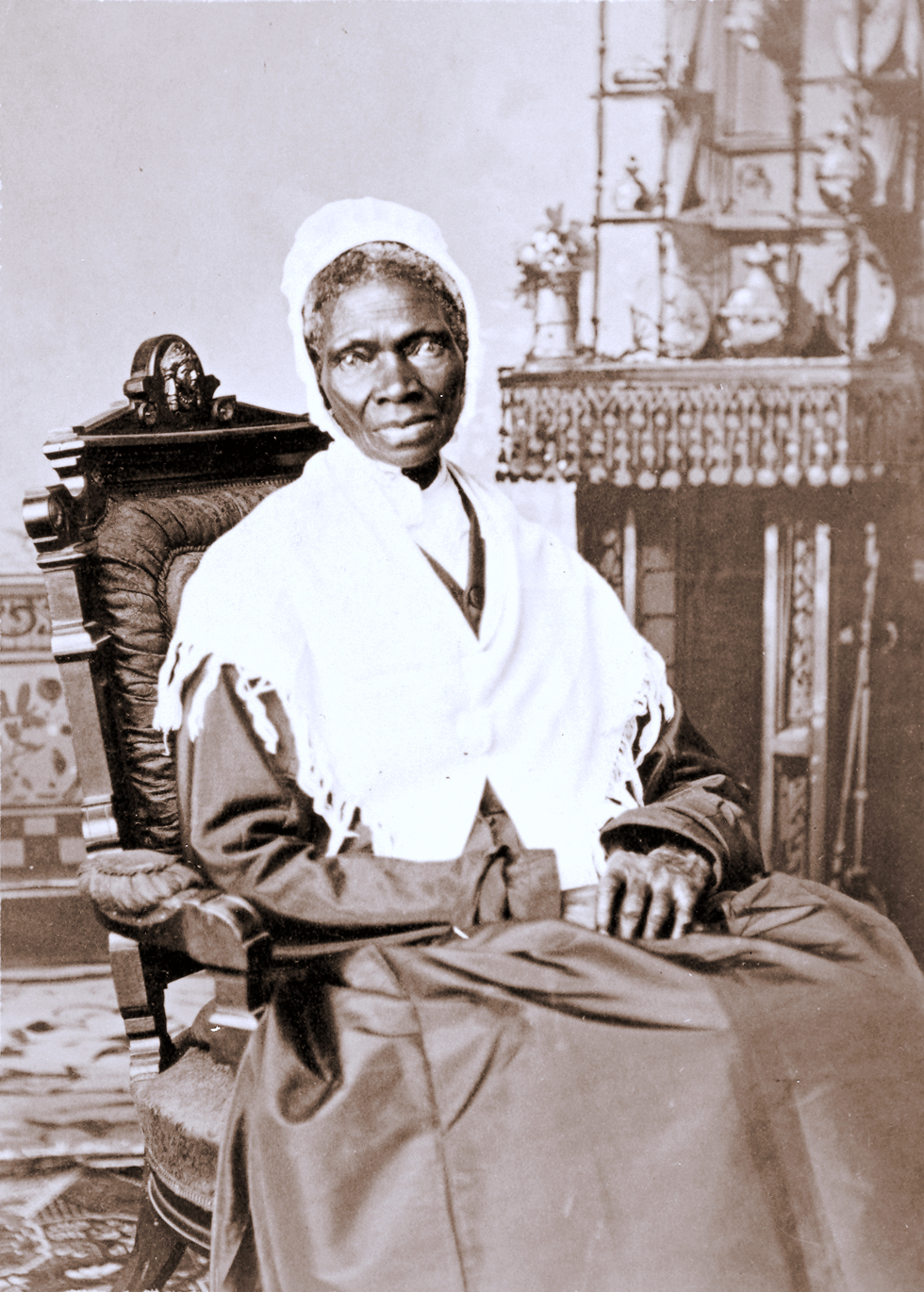
Sojourner Truth 1797? ~ Nov 26, 1883

1. For one thing, when Sister Sojourner was born, she was given the name Isabella Baumfree.

2. And she was born into slavery at the tail end of the 18th century, when owning human beings and forcing them to work for you all their lives was still perfectly legal. up north in New York State, in Swartekill, a tiny village by the Hudson River.  About a hundred miles north of NYC.

3. Her father was born in Ghana. He might have grown up in western Africa, but like many thousands of his fellow Africans, he was kidnapped and sold into slavery. Had to suffer that miserable boat trip across the Atlantic.  He was given the name James Baumfree. Both James and Elizabeth, his wife, whose folks were stolen from Ginea, are known to history thanks to their stalwart daughter, 'Belle.' 

4.  Belle wasn't allowed to be with Robert, the man she loved because he was owned by another white man. How sad and rotten is that?  

5. With Robert and another man to whom Belle was pretty much assigned, she had five children, Diana, Peter, Elizabeth, Thomas, and Sophia.  

6. In time, Belle escaped to freedom with baby Sophia. "I walked off, believing that to be right."

7. In time, Belle went to court to get back her little boy, Peter, who'd been illegally sold down south. She was one of the first and few women of color to go to law and win.

8. Years of hard labor for her masters made Belle very strong. And she was tall, 6 feet tall.

9. In the summer of 1843, as hundreds of pioneers were having the adventures of their lives on the Oregon Trail, Belle Baumfree took a new name: She would be known as Sojourner Truth. She would go walking from place to place, preaching her truth, that slavery was a wicked thing. That is must end.

Heroic William Lloyd Garrison 1805 ~1879
10. One way she paid her way was selling the harrowing story of her life, an eyewitness testimony of a life enslaved.  Did she write it? No, she'd never been taught how. No, she told her Narrative.  Did she publish it herself?  No, that was done by the great abolition activist William Lloyd Garrison.    Want to learn more about him and the heroic generation, who worked so long and hard against slavery? All those long decades BEFORE the Civil War? Then totally check out the terrific documentary, The Abolitionists, recently shown on PBS.

Sojourner Truth's Carte de Visite
11. And Sojourner Truth sold pictures of herself.   Cartes des visites, the photo"visiting cards," so popular in the 19th century. 

12. Oh the things that are to be known about this valiant woman number far and away more than a dozen. That she recruited and aided African American soldiers, serving in the Union Army. That she was injured by a brutal, furious white man when she tried to integrate the streetcars of Washington, DC. (He was probably scared, too. No excuse, but change IS pretty danged scary. It's hard when old ways are passing.)  But for sure I want you to know the moment in 1851 when Sojourner Truth walked to the front of a fine old church in Akron, Ohio, and testified.  After all, wasn't she a woman?

           How do we know what Sojourner said on the long ago 29th of May, 1851? How she looked? Because someone who was there wrote down what she heard and saw that day. That's a good lesson, you guys: Want to make history? Write down what you know and remember so people in the future will know and remember, too. 
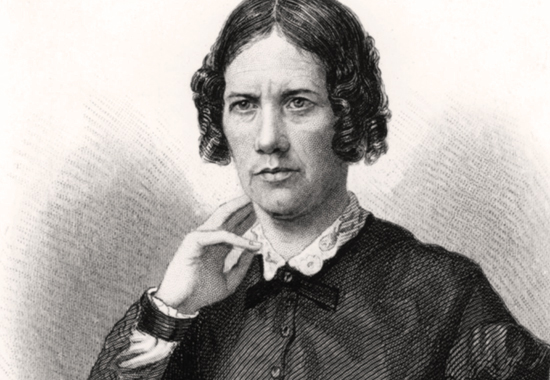
Frances Dana Barker Gage 1808 ~ 1884

REMINISCENCES BY FRANCES D. GAGE.
SOJOURNER TRUTH.
The leaders of the movement trembled on seeing a tall, gaunt black woman in 
a gray dress and white turban, surmounted with an uncouth sun-bonnet, march 
deliberately into the church, walk with the air of a queen up the aisle, and 
take her seat upon the pulpit steps. A buzz of disapprobation was heard all 
over the house, and there fell on the listening ear, "An abolition affair!" 
"Woman's rights and niggers!" "I told you so!" "Go it, darkey!"
I chanced on that occasion to wear my first laurels in public life as 
president of the meeting. At my request order was restored, and the business 
of the Convention went on. Morning, afternoon, and evening exercises came and 
went. Through all these sessions old Sojourner, quiet and reticent as the 
"Lybian Statue," sat crouched against the wall on the corner of the pulpit 
stairs, her sun-bonnet shading her eyes, her elbows on her knees, her chin 
resting upon her broad, hard palms. At intermission she was busy selling the 
"Life of Sojourner Truth," a narrative of her own strange and adventurous 
life. Again and again, timorous and trembling ones came to me and said, with 
earnestness, "Don't let her speak, Mrs. Gage, it will ruin us. Every 
newspaper in the land will have our cause mixed up with abolition and 
niggers, and we shall be utterly denounced." My only answer was, "We shall 
see when the time comes."

The second day the work waxed warm. Methodist, Baptist, Episcopal, 
Presbyterian, and Universalist ministers came in to hear and discuss the 
resolutions presented. One claimed superior rights and privileges for man, on 
the ground of "superior intellect"; another, because of the "manhood of 
Christ; if God had desired the equality of woman, He would have given some 
token of His will through the birth, life, and death of the Saviour." Another 
gave us a theological view of the "sin of our first mother."

There were very few women in those days who dared to "speak in meeting"; and 
the august teachers of the people were seemingly getting the better of us, 
while the boys in the galleries, and the sneerers among the pews, were hugely 
enjoying the discomfiture, as they supposed, of the "strong-minded." Some of 
the tender-skinned friends were on the point of losing dignity, and the 
atmosphere betokened a storm. When, slowly from her seat in the corner rose 
Sojourner Truth, who, till now, had scarcely lifted her head. "Don't let her 
speak!" gasped half a dozen in my ear. She moved slowly and solemnly to the 
front, laid her old bonnet at her feet, and turned her great speaking eyes to 
me. There was a hissing sound of disapprobation above and below. I rose and 
announced "Sojourner Truth," and begged the audience to keep silence for a 
few moments.

The tumult subsided at once, and every eye was fixed on this almost Amazon 
form, which stood nearly six feet high, head erect, and eyes piercing the 
upper air like one in a dream. At her first word there was a profound hush. 
She spoke in deep tones, which, though not loud, reached every ear in the 
house, and away through the throng at the doors and windows.

"Wall, chilern, whar dar is so much racket dar must be somethin' out o' 
kilter. I tink dat 'twixt de niggers of de Souf and de womin at de Norf, all 
talkin' 'bout rights, de white men will be in a fix pretty soon. But what's 
all dis here talkin' 'bout?

"Dat man ober dar say dat womin needs to be helped into carriages, and 
lifted ober ditches, and to hab de best place everywhar. Nobody eber helps me 
into carriages, or ober mud-puddles, or gibs me any best place!" And raising 
herself to her full height, and her voice to a pitch like rolling thunder, 
she asked. "And a'n't I a woman? Look at me! Look at my arm! (and she bared 
her right arm to the shoulder, showing her tremendous muscular power). I have 
ploughed, and planted, and gathered into barns, and no man could head me! And 
a'n't I a woman? I could work as much and eat as much as a man--when I could 
get it--and bear de lash as well! And a'n't I a woman? I have borne thirteen 
chilern, and seen 'em mos' all sold off to slavery, and when I cried out with 
my mother's grief, none but Jesus heard me! And a'n't I a woman?

"Den dey talks 'bout dis ting in de head; what dis dey call it?" 
("Intellect," whispered some one near.) "Dat's it, honey. What's dat got to 
do wid womin's rights or nigger's rights? If my cup won't hold but a pint, 
and yourn holds a quart, wouldn't ye be mean not to let me have my little 
half-measure full?" And she pointed her significant finger, and sent a keen 
glance at the minister who had made the argument. The cheering was long and 
loud.

"Den dat little man in black dar, he say women can't have as much rights as 
men, 'cause Christ wan't a woman! Whar did your Christ come from?" Rolling 
thunder couldn't have stilled that crowd, as did those deep, wonderful tones, 
as she stood there with outstretched arms and eyes of fire. Raising her voice 
still louder, she repeated, "Whar did your Christ come from? From God and a 
woman! Man had nothin' to do wid Him." Oh, what a rebuke that was to that 
little man.

Turning again to another objector, she took up the defense of Mother Eve. I 
can not follow her through it all. It was pointed, and witty, and solemn; 
eliciting at almost every sentence deafening applause; and she ended by 
asserting: "If de fust woman God ever made was strong enough to turn de world 
upside down all alone, dese women togedder (and she glanced her eye over the 
platform) ought to be able to turn it back, and get it right side up again! 
And now dey is asking to do it, de men better let 'em." Long-continued 
cheering greeted this. "'Bleeged to ye for hearin' on me, and now ole 
Sojourner han't got nothin' more to say."

Amid roars of applause, she returned to her corner, leaving more than one of 
us with streaming eyes, and hearts beating with gratitude. She had taken us 
up in her strong arms and carried us safely over the slough of difficulty 
turning the whole tide in our favor. I have never in my life seen anything 
like the magical influence that subdued the mobbish spirit of the day, and 
turned the sneers and jeers of an excited crowd into notes of respect and 
admiration. Hundreds rushed up to shake hands with her, and congratulate the 
glorious old mother, and bid her God-speed on her mission of "testifyin' agin 
concerning the wickedness of this 'ere people." 


Friday, February 1, 2013

BLACK HISTORY MONTH No. 1: 12 Cool Things To Know About George Washington Carver

"Education is the key 
to unlock the golden door 
of freedom."

"When you do the common things in life 
in an uncommon way, 
you will command 
the attention of the world."

"I love to think of nature as an unlimited 
broadcasting station, 
through which God speaks to us 
every hour, if we will only tune in."  

George Washington Carver  
1864? ~ 1943
What a cool face, no?


1. Around 1865, at the end of the Civil War, when George was an infant, night riders kidnapped him, his sister, and his mom, Mary, from their owners, Moses and Susan Carver.  They were farmers down around the village of Diamond Grove, in southwestern Missouri.  Moses got people to search for them, but only baby George was recovered.

2. No one really knows exactly when GWC was born, but we do know that poor baby George nearly died of whooping cough. This may account for his unusually high voice. Toward the end of this LINK you can hear him.

3. Not until he was a young man did George adopt 'Washington' for his middle name.


4. He was just a boy, barely into his teens, George, a very inquisitive young man, set out walking to where he could get an education, a nearly impossible thing for an African American in 1870s America.
Still, he managed to graduate from high school in Minneapolis, KS.

5.  He supported himself by doing people's laundry.

6.  George was accepted into Highland College in northeastern Kansas, then turned away because of the color of his skin.

7. For a while, in the 1880s, GWC was a Kansas homesteader, living in a sod house he built himself.

8. Eventually, GWC became the first black student at Iowa Agricultural College (now Iowa State University). Not only did he graduate (with a degree in agriculture), GWC became a faculty member.  
9.  Though GWC specialized in agriculture and botany, he was an accomplished musician and a painter. In fact, a couple of his paintings were displayed at the Chicago World's Fair of 1893.

10.  The world famous speaker, activist, and educator, Booker T. Washington hired GWC as a professor at his Tuskegee Institute, Tuskegee, Alabama.

11.  Of course charismatic GWC, the "Peanut Man,"  is known for his experiments with peanuts, as a way to help southern farmers break their soil-killing addiction to raising cotton and nothing but cotton. He even testified to his findings before the U.S. Congress. But Geo. Wash. Carver earned national fame for his methods of treating and easing the suffering of those, such as President Franklin D. Roosevelt, who were crippled by polio.

12.  After Dr. Carver (not a real doctor, but GWC was called that out of respect for his life of learning and teaching) passed away on January 5, 1943, a National Monument was dedicated to him - the first such honor for any American who had not been a U.S. president. You can experience the George Washington Carver National Monument part of the National Park Service, at Diamond, MO, GWC's birthplace. It is well worth the visit.  And the charismatic man himself is well worth the knowing.

To read more about GWC, there are plenty of fine books, but please DO check out mine: The Groundbreaking, Chance-Taking Life of GEORGE WASHINGTON CARVER and SCIENCE and INVENTION in AMERICA.