Posts
Posts


| IT was a lover and his lass, | |
| With a hey, and a ho, and a hey nonino, | |
| That o'er the green corn-field did pass, | |
| In the spring time, the only pretty ring time, | |
| When birds do sing, hey ding a ding, ding; | 5 |
| Sweet lovers love the spring. | |
| Between the acres of the rye, | |
| With a hey, and a ho, and a hey nonino, | |
| These pretty country folks would lie, | |
| In the spring time, the only pretty ring time, | 10 |
| When birds do sing, hey ding a ding, ding; | |
| Sweet lovers love the spring. | |
| This carol they began that hour, | |
| With a hey, and a ho, and a hey nonino, | |
| How that life was but a flower | 15 |
| In the spring time, the only pretty ring time, | |
| When birds do sing, hey ding a ding, ding; | |
| Sweet lovers love the spring. | |
| And, therefore, take the present time | |
| With a hey, and a ho, and a hey nonino, | 20 |
| For love is crown`d with the prime | |
| In the spring time, the only pretty ring time, | |
| When birds do sing, hey ding a ding, ding; | |
| Sweet lovers love the spring. |
Showing posts with label National Poetry Month. Cheryl Harness. Show all posts
Showing posts with label National Poetry Month. Cheryl Harness. Show all posts
Monday, April 23, 2012
Nat'l Poetry Month No. 23
William Shakespeare, who died 396 years ago today, wrote this dancy dealybob. Isn't it wondrous springlike?

Sunday, April 22, 2012
Nat'l Poetry Month No. 22
A Bird Came Down the Walk
by Emily Dickinson

by Emily Dickinson

A Bird came down the Walk— He did not know I saw— He bit an Angleworm in halves And ate the fellow, raw, And then he drank a Dew From a convenient Grass— And then hopped sidewise to the Wall To let a Beetle pass— He glanced with rapid eyes That hurried all around— They looked like frightened Beads, I thought— He stirred his Velvet Head Like one in danger, Cautious, I offered him a Crumb And he unrolled his feathers And rowed him softer home— Than Oars divide the Ocean, Too silver for a seam— Or Butterflies, off Banks of Noon Leap, plashless as they swim. |
Nat'l Poetry Month No. 21
Phenomenal Woman
by Maya Angelou

Pretty women wonder where my secret lies.
I'm not cute or built to suit a fashion model's size
But when I start to tell them,
They think I'm telling lies.
I say,
It's in the reach of my arms
The span of my hips,
The stride of my step,
The curl of my lips.
I'm a woman
Phenomenally.
Phenomenal woman,
That's me.
I walk into a room
Just as cool as you please,
And to a man,
The fellows stand or
Fall down on their knees.
Then they swarm around me,
A hive of honey bees.
I say,
It's the fire in my eyes,
And the flash of my teeth,
The swing in my waist,
And the joy in my feet.
I'm a woman
Phenomenally.
Phenomenal woman,
That's me.
Men themselves have wondered
What they see in me.
They try so much
But they can't touch
My inner mystery.
When I try to show them
They say they still can't see.
I say,
It's in the arch of my back,
The sun of my smile,
The ride of my breasts,
The grace of my style.
I'm a woman
Phenomenally.
Phenomenal woman,
That's me.
Now you understand
Just why my head's not bowed.
I don't shout or jump about
Or have to talk real loud.
When you see me passing
It ought to make you proud.
I say,
It's in the click of my heels,
The bend of my hair,
the palm of my hand,
The need of my care,
'Cause I'm a woman
Phenomenally.
Phenomenal woman,
That's me.
I'm not cute or built to suit a fashion model's size
But when I start to tell them,
They think I'm telling lies.
I say,
It's in the reach of my arms
The span of my hips,
The stride of my step,
The curl of my lips.
I'm a woman
Phenomenally.
Phenomenal woman,
That's me.
I walk into a room
Just as cool as you please,
And to a man,
The fellows stand or
Fall down on their knees.
Then they swarm around me,
A hive of honey bees.
I say,
It's the fire in my eyes,
And the flash of my teeth,
The swing in my waist,
And the joy in my feet.
I'm a woman
Phenomenally.
Phenomenal woman,
That's me.
Men themselves have wondered
What they see in me.
They try so much
But they can't touch
My inner mystery.
When I try to show them
They say they still can't see.
I say,
It's in the arch of my back,
The sun of my smile,
The ride of my breasts,
The grace of my style.
I'm a woman
Phenomenally.
Phenomenal woman,
That's me.
Now you understand
Just why my head's not bowed.
I don't shout or jump about
Or have to talk real loud.
When you see me passing
It ought to make you proud.
I say,
It's in the click of my heels,
The bend of my hair,
the palm of my hand,
The need of my care,
'Cause I'm a woman
Phenomenally.
Phenomenal woman,
That's me.
Submitted
Tuesday, April 17, 2012
Nat'l Poetry Month No. 17
 What a lovely poem....
April Rain Song
Let the rain kiss you
Let the rain beat upon your head with silver liquid drops
Let the rain sing you a lullaby
The rain makes still pools on the sidewalk
The rain makes running pools in the gutter
The rain plays a little sleep song on our roof at night
And I love the rain.
Monday, April 16, 2012
Nat'l Poetry Month No. 16

I don't know who John D. Duvall is, but look at this poem he wrote:
To All That Fly
May God grant you blue skies aloft,
With winds of calm by land,
As you play on the outskirts of heaven,
On the fragile wings of man.
His little verse is particularly apt today, the anniversary of the birth, in 1867, of Wilbur Wright. Moreover, exactly 100 years ago today, on the 16th of April, 1912, pioneer aviator Harriet Quimby became the first female pilot to fly, alone, in a tiny dragonfly of an 'aeroplane' across the stormy English Channel.
“Without any of the modern instruments, in a plane which was hardly more than a winged skeleton with a motor, and one, furthermore, with which she was totally unfamiliar, to cross the Channel in 1912 required more bravery and skill than to cross the Atlantic today." Amelia Earhart, 1928
Sunday, April 15, 2012
Nat'l Poetry Month No. 15
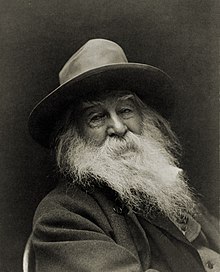
So, it was the morning of this day in history,
on April 15, 1865,
that Abraham Lincoln passed away,
just as the Civil War was ending.
Walt Whitman poured his feelings into this poem:
O Captain! my Captain! our fearful trip is done;
The ship has weathered every rack, the prize we sought is won;
The port is near, the bells I hear, the people all exulting,
While follow eyes the steady keel, the vessel grim and daring:
- But O heart! heart! heart!
- O the bleeding drops of red,
- Where on the deck my Captain lies,
- Fallen cold and dead.
Rise up—for you the flag is flung—for you the bugle trills;
For you bouquets and ribboned wreaths—for you the shores a-crowding;
For you they call, the swaying mass, their eager faces turning;
- Here Captain! dear father!
- This arm beneath your head;
- It is some dream that on the deck,
- You've fallen cold and dead.
My father does not feel my arm, he has no pulse nor will;
The ship is anchored safe and sound, its voyage closed and done;
From fearful trip, the victor ship, comes in with object won;
- Exult, O shores, and ring, O bells!
- But I, with mournful tread,
- Walk the deck my Captain lies,
- Fallen cold and dead.
Saturday, April 14, 2012
Nat'l Poetry Month No. 14

| |
| |
Friday, April 13, 2012
Nat'l Poetry Month No. 13

Oh my goodness, it's a lost boy's birthday today [I'm just saying] and thank goodness I took on this little exercise in poetry else I'd never have discovered THIS by Rita Dove
Golden Oldie
I made it home early, only to get
stalled in the driveway-swaying
at the wheel like a blind pianist caught in a tune
meant for more than two hands playing.
The words were easy, crooned
by a young girl dying to feel alive, to discover
a pain majestic enough
to live by. I turned the air conditioning off,
leaned back to float on a film of sweat,
and listened to her sentiment:
Baby, where did our love go?-a lament
I greedily took in
without a clue who my lover
might be, or where to start looking.
I made it home early, only to get
stalled in the driveway-swaying
at the wheel like a blind pianist caught in a tune
meant for more than two hands playing.
The words were easy, crooned
by a young girl dying to feel alive, to discover
a pain majestic enough
to live by. I turned the air conditioning off,
leaned back to float on a film of sweat,
and listened to her sentiment:
Baby, where did our love go?-a lament
I greedily took in
without a clue who my lover
might be, or where to start looking.
Baybee, click HERE & read some more
Thursday, April 12, 2012
Nat'l Poetry Month No. 12

Okay, so I probably should say something about Fort Sumter & how eager a bunch of long-gone, long-pissed-off Southern partisans were to blow it out of the water....about my beautiful auburn-haired aunt, Dorothy Lea, who'd be 92 today if she hadn't died years ago and thank goodness she did - her arthritis was a daily, hourly curse, but no. I'll just call your attention to Amy Lowell, the poet I chose for today and to her poem, LILACS.
Wednesday, April 11, 2012
Nat'l Poetry Month No. 11
 Oh my gosh. Only because I set out
 to post a month's worth of poems
I came across this one. Jumped on it
because it was short & I'm in a hurry
to get to work. Little did I expect to
discover this kindred spirit. Swap 'art'
for 'song' & you've got me. 'Nothing
stays with me [inconstant me] long,'
I'm afraid.
The Dreams of My Heart
The dreams of my heart and my mind pass,
Nothing stays with me long,
But I have had from a child
The deep solace of song;
If that should ever leave me,
Let me find death and stay
With things whose tunes are played out and forgotten
Like the rain of yesterday.
Tuesday, April 10, 2012
Nat'l Poetry Month No. 10

Oh baybee, I'm not much on romance these days, but I'm not so embittered & frosted over that I cannot delight in this lovely poem by Robert Louis Stevenson: [and the image here is one of my favorites of this extraordinary man]
Of bird-song at morning and star-shine at night.
I will make a palace fit for you and me,
Of green days in forests and blue days at sea.
I will make my kitchen, and you shall keep your room,
Where white flows the river and bright blows the broom,
And you shall wash your linen and keep your body white
In rainfall at morning and dewfall at night.
And this shall be for music when no one else is near,
The fine song for singing, the rare song to hear!
That only I remember, that only you admire,
Of the broad road that stretches and the roadside fire.
Nat'l Poetry Month No. 9
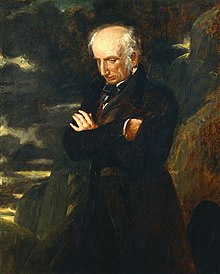
The World is Too Much With Us
The world is too much with us; late and soon, Getting and spending, we lay waste our powers; Little we see in Nature that is ours; We have given our hearts away, a sordid boon! This Sea that bares her bosom to the moon; The winds that will be howling at all hours, And are up-gathered now like sleeping flowers, For this, for everything, we are out of tune; It moves us not.--Great God! I'd rather be A pagan suckled in a creed outworn; So might I, standing on this pleasant lea, Have glimpses that would make me less forlorn; Have sight of Proteus rising from the sea; Or hear old Triton blow his wreathèd horn. William Wordsworth | |

Nat'l Poetry Month No. 8
 To Night
Swiftly walk over the western wave,
Spirit of Night!
Out of the misty eastern cave
Where, all the long and lone daylight,
Thou wovest dreams of joy and fear,
Which make thee terrible and dear, -
Swift be thy flight!
Wrap thy form in a mantle grey,
Star-inwrought!
Blind with thine hair the eyes of Day,
Kiss her until she be wearied out,
Then wander o'er city, and sea, and land,
Touching all with thine opiate wand -
Come, long-sought!
When I arose and saw the dawn,
I sighed for thee;
When light rode high, and the dew was gone,
And noon lay heavy on flower and tree,
And the weary Day turned to his rest,
Lingering like an unloved guest,
I sighed for thee.
Thy brother Death came, and cried
`Wouldst thou me?'
Thy sweet child Sleep, the filmy-eyed,
Murmured like a noontide bee
`Shall I nestle near thy side?
Wouldst thou me?' -And I replied
`No, not thee!'
Death will come when thou art dead,
Soon, too soon -
Sleep will come when thou art fled;
Of neither would I ask the boon
I ask of thee, beloved Night -
Swift be thine approaching flight,
Come soon, soon!
What passions he inspired, truly...
Nat'l Poetry Month No. 7


I looked in my heart while the wild swans went over. And what did I see I had not seen before? Only a question less or a question more; Nothing to match the flight of wild birds flying. Tiresome heart, forever living and dying, House without air, I leave you and lock your door. Wild swans, come over the town, come over The town again, trailing your legs and crying!
|
Nat'l Poetry Month No. 6
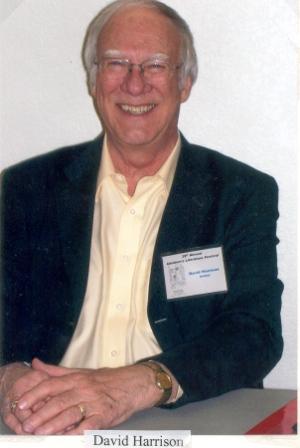 So, proud I am that THIS poet is a genial gent and a buddy of mine:
 David L. Harrison of Springfield, MO.
THIS is the opening poem of PIRATES, one of his many, many fine books. I like it so much I even bought a copy of it and I'd advise you to do the same. (Illustrations by Dan Burr: also excellent.)
Pirate Nest
Times were hard for some men.
They slept in places
roaches would snub,
ate when they were able,
drank what they could.
The waterfront teemed
with men like that,
living life on the bottom rung,
neither giving
nor expecting mercy.
Tomorrow would be
like yesterday –
rotting teeth, rat bites,
odd jobs loading ships,
stealing a coin now and then.
Men like that nursed
their bruises with their beer,
brooded, plotted revenge on life,
decided that dying as a pirate
was better than living
like
this.
Monday, April 9, 2012
National Poetry Month No. 3


Another thing: One of my fondest memories is reading poems to my old man when I went to visit him at the rest home. My dad could be dreadful & cruel. He could be sentimental and dear. And tears came into his eyes when I sat by his deathbed, reading stories out of a rickety poetry anthology we'd had around the house. Story poems [they used to be SO popular, in times not so cool & cynical as ours] such as this, by Ernest Thayer
| Casey at the Bat by Ernest Lawrence Thayer © |
Published: The Examiner (06-03-1888) |
The Outlook wasn't brilliant for the Mudville nine that day: A straggling few got up to go in deep despair. The rest But Flynn preceded Casey, as did also Jimmy Blake, But Flynn let drive a single, to the wonderment of all, Then from 5,000 throats and more there rose a lusty yell; There was ease in Casey's manner as he stepped into his place; Ten thousand eyes were on him as he rubbed his hands with dirt; And now the leather-covered sphere came hurtling through the air, From the benches, black with people, there went up a muffled roar, With a smile of Christian charity great Casey's visage shone; "Fraud!" cried the maddened thousands, and echo answered fraud; The sneer is gone from Casey's lip, his teeth are clenched in hate; Oh, somewhere in this favored land the sun is shining bright; "Phin" |
Poetry Month No. 2

If you're the type [whatever that may be], you probably know that this is National Poetry Month. Fitting, I suppose. There is something rather tender & poetic about April, & famously cruel. The poem below is by Elinore Wylie. Am I a student, a fan of hers? Not especially. A verse of hers, from a tattered paperback I must have gotten years ago, stuck in my mind. Now I'm thinking I want to read more of what she wrote. Isn't this one lovely?
Beauty
Say not of beauty she is good,
Or aught but beautiful,
Or sleek to doves' wings of the wood
Her wild wings of a gull.
Call her not wicked; that word's touch
Consumes her like a curse;
But love her not too much, too much,
For that is even worse.
O, she is neither good nor bad,
But innocent and wild!
Enshrine her and she dies, who had
The hard heart of a child.
Subscribe to:
Posts (Atom)