Showing posts with label Cheryl Harness. Show all posts

Thursday, February 7, 2013

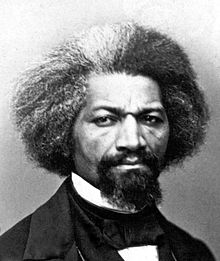
BLACK HISTORY MONTH No. 7: 12 Things to Know About Frederick Douglass

So, apart from the fact that - I mean, what sort of a cockamamie black history month deal would NOT include Frederick Douglass?  On the other hand, it seems kind of rotten to have him and these other complex individuals relegated to 1/12th of the year.  Frederick Douglass is just one heck of a fierce American.  Courageous. Ferocious. And oh my gosh, what a FACE!


"It is easier to build strong children 
than to repair broken men." 

"If there is no struggle,
there is no progress." 

I love this one:
"We have to do with the past 
only as we can make it useful 
to the present and the future." 


1.  He never knew his dad, a white man, and his mom, from whom he was early on taken away, died when he was a boy.  He came into the world in Maryland, around 1818, but no one knows for sure exactly when.

2. Yikes, I should have posted this next week!  Frederick chose Valentine's Day as his birthday.

3.  Originally, he was named Frederick Augustus Washington Bailey. 

4. Though doing so was against the law– and against the wishes of her husband: after all, an educated slave might become unhappy about being enslaved –  the wife of one of his white masters taught him his letters and young Frederick scavenged education from white kids, anywhere he could get it.  He practiced reading, newspapers, signs, anything he could find. Then he did his best to teach others.  Until angry, club-wielding white folks broke up his classes.

5. One of his masters, Edward Covey, was known as a "slave-breaker," one who'd beat and torment the spirit out of a slave.    16-year-old Frederick fought back, so much and so well, that Mr. Covey never beat him again.  

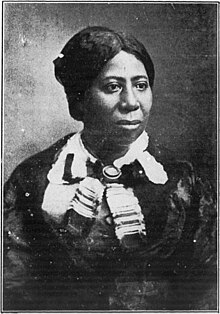
Anna Murray Douglass
      "I felt as one might feel upon escape from a den of hungry lions." 
6. On his 3rd attempt, 20-yr-old Frederick escaped. Stole himself away. In 1838.  With the help of his future wife Anna Murray.  Their marriage, which began on 15 Sept 1838, lasted 44 years.

7. In his anti-slavery speeches, he spoke so well, people wondered if he'd really been a slave.  So, he wrote his 1845 bestseller, his  Narrative of the Life of Frederick Douglass.  

8. Then he left the country.  Went on a 2 year speaking tour of Ireland and England.  Because, really, there's nothing like an escaped slave writing a popular, incendiary autobio to attract the attention of his legal owner.   But you know what happened?  Frederick's fans in Great Britain passed the hat, came up w/ the money for his freedom.

9. Back in the U.S.A. in 1847, F.D. began an antislavery newspaper.  AND, he showed up at Seneca Falls, NY, at the very FIRST Women's Rights Convention.  In the years to come, F.D. would speak often about women's civil rights.  
When Amendment XV to the U.S. Constitution was ratified in 1870, African American men were allowed to vote.  Women, black or white, would have to wait another 50 years. 

10. For the rest of his life Frederick Douglass wrote newspaper articles, books, speeches. He campaigned for social justice, equal education.  With Ida B. Wells, he campaigned against the vile, nasty practice of lynching. 

Cedar Hill
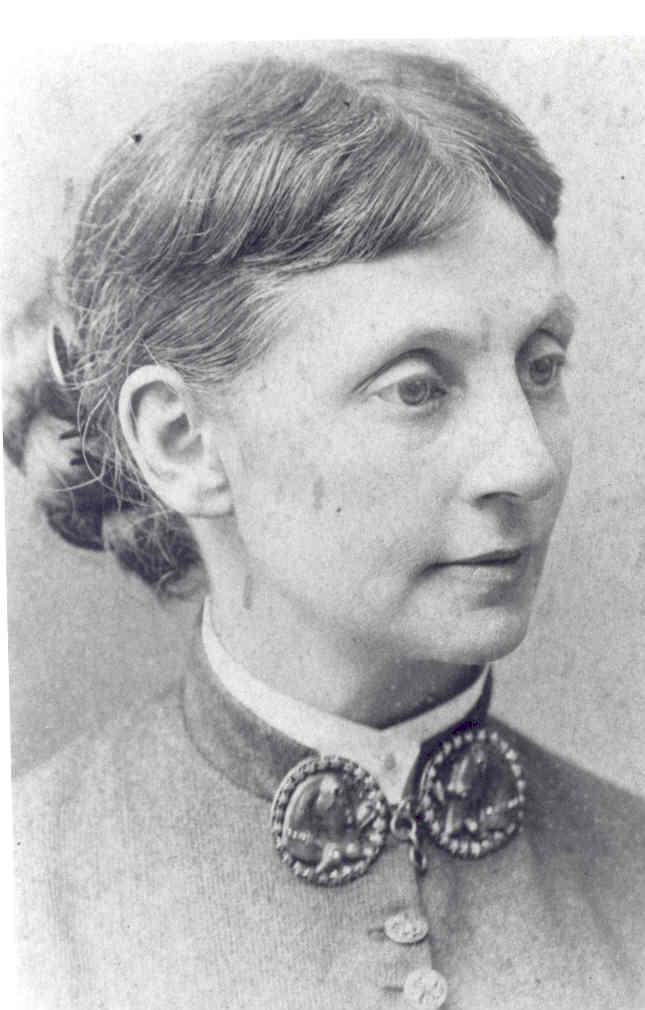
Helen Pitts Douglass
11.  Is there a Frederick Douglass National Historic Site? Why yes!  Frederick and Anna bought Cedar Hill,  in southeastern D.C., in 1877.  Five years later, Anna died.  then, in 1884, F.D. remarried. His 2nd wife was sufragist Helen Pitts.   

"This proves I am impartial," F.D. said, laughingly, "My first wife was the color of my mother and the second the color of my father."

12.  The old lion died 11 years later, of a massive heart attack. 


“Those who profess to favor freedom and yet depreciate agitation, are people who want crops without ploughing the ground; they want rain without thunder and lightning; they want the ocean without the roar of its many waters. The struggle may be a moral one, or it may be a physical one, or it may be both. But it must be a struggle. Power concedes nothing without a demand. It never did and it never will.”


Sunday, February 3, 2013

Black History Month No. 3: 12 Cool Things to Know About Mary Ann Shadd Cary

       Okay, so I'd never heard of Mary Ann Shadd Cary until I had the privilege of writing and illustrating the book Rabble Rousers: Twenty Women Who Mad a Difference (pub'd by Dutton in 2003. One of them was Sojourner Truth, about whom I wrote yesterday.)  In learning about Mrs. Cary, honored I was to know of this valiant, stubborn lady. Honored I am to acquaint others with the fact that she lived.


"It's better to wear out than to rust out."

"Self-reliance is the Fine Road to Independence."

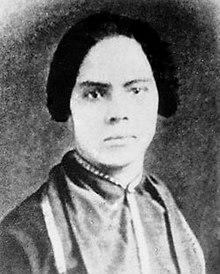
Mary Ann Shadd Cary  1823 ~ 1893
I find myself picturing her smiling and speaking, don't you?

1. Mary Ann's parents, Abraham and Harriet Shadd, were free black citizens of Wilmington, Delaware and big deals in the Underground Railroad: a very brave undertaking in their America. Mary Ann was the first of their 13 children.

2. When Mary Ann was only 16 years old, she used the education she'd received from Pennsylvania Quakers to start a school. Just think of that.  Who were her students? African American children. As in most places in the Land of Liberty, there was precious little equality and fairness for people of color, education-wise and otherwise. 

3. When Mary Ann was 27, the U.S. Congress came up with the Compromise of 1850 as a way to calm things down between pro- and anti-slavery Americans. Part of the legislation was the Fugitive Slave Act: Runaway slaves, who'd made it to the northern states could be arrested and sent back to their owners down South. As a result, any person of color could be captured, detained, and sent into servitude. Thousands of African Americans fled to Canada. That's what Mary Ann Shadd did, along with her brother, Isaac.  

4. And what did she do when she got there? She taught, she wrote, made speeches, founded an integrated school (in Windsor, Ontario), and in 1854, Miss Shadd began a newspaper, thus becoming North America's  FIRST African American woman publisher.

5. Ms. Shadd's Provincial Freeman of Toronto, Canada was full of information for blacks looking to build new lives in the far, free North. Moreover the pages of this weekly paper were devoted to writings on the abolition of the wicked practice of slavery. 

6. In 1856, Mary Ann Shadd married Thomas Cary. Together they had a son and a daughter, Linton and Sarah.  Thomas passed away in 1860.

7. Mary Ann Shadd Cary moved to Washington, DC. When this working mother wasn't teaching or serving as a school principal, she was recruiting black soldiers for the Union Army.

8. After the Civil War and the final abolition of slavery, Mrs. Cary became the FIRST woman of color to enter the law school of Howard University, in 1869. 

Charlotte E. Ray, 1850 ~ 1911
9. Upon graduating, Mary Ann Shadd Cary was the second female of her race (after New Yorker, Charlotte E. Ray, in 1872) to obtain a law degree, in fact, one of the first U.S. females to do so, regardless of color.

10. Mrs. Cary applied her terrific energy to winning U.S. women the right to vote, to fully participate in civic life of their nation. 

11. To that end, Mrs. Cary founded the Colored Women's Progressive Franchise Association in 1880.

12. On June 5, 1893, Mary Ann Shadd Cary, educator, abolitionist, political dissident and activist, journalist, lawyer, and mom, died of cancer, having used her life and intellect to the fullest. 


Saturday, February 2, 2013

BLACK HISTORY MONTH No. 2: 12 Things to Know About Sojourner Truth

"Truth is powerful and it prevails."

"I am not going to die;
 I'm going home like a shooting star."

"If women want any rights 
more than they's got, 
why don't they just take 'em 
and not be talking about it."

"Ain't I a woman?"

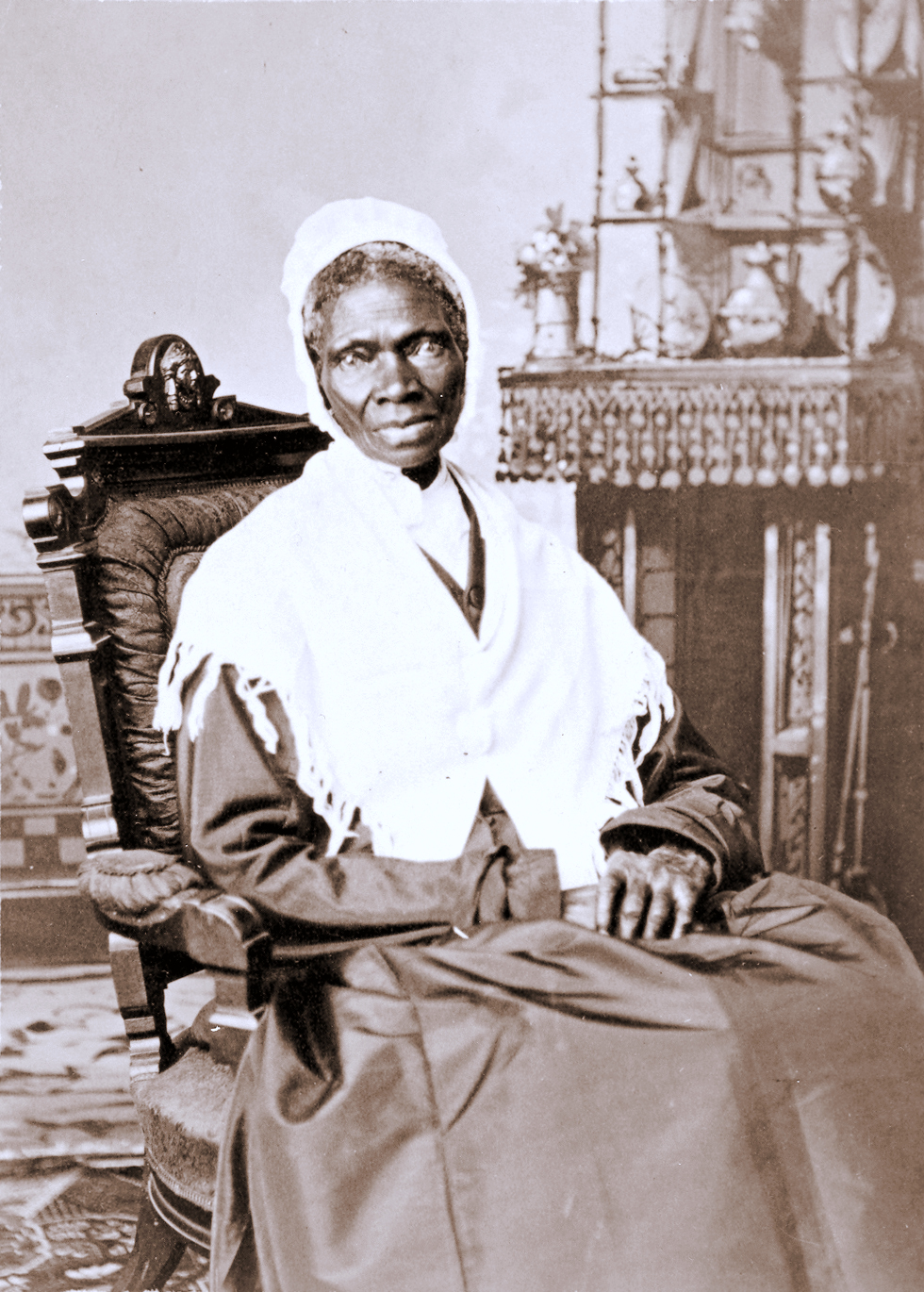
Sojourner Truth 1797? ~ Nov 26, 1883

1. For one thing, when Sister Sojourner was born, she was given the name Isabella Baumfree.

2. And she was born into slavery at the tail end of the 18th century, when owning human beings and forcing them to work for you all their lives was still perfectly legal. up north in New York State, in Swartekill, a tiny village by the Hudson River.  About a hundred miles north of NYC.

3. Her father was born in Ghana. He might have grown up in western Africa, but like many thousands of his fellow Africans, he was kidnapped and sold into slavery. Had to suffer that miserable boat trip across the Atlantic.  He was given the name James Baumfree. Both James and Elizabeth, his wife, whose folks were stolen from Ginea, are known to history thanks to their stalwart daughter, 'Belle.' 

4.  Belle wasn't allowed to be with Robert, the man she loved because he was owned by another white man. How sad and rotten is that?  

5. With Robert and another man to whom Belle was pretty much assigned, she had five children, Diana, Peter, Elizabeth, Thomas, and Sophia.  

6. In time, Belle escaped to freedom with baby Sophia. "I walked off, believing that to be right."

7. In time, Belle went to court to get back her little boy, Peter, who'd been illegally sold down south. She was one of the first and few women of color to go to law and win.

8. Years of hard labor for her masters made Belle very strong. And she was tall, 6 feet tall.

9. In the summer of 1843, as hundreds of pioneers were having the adventures of their lives on the Oregon Trail, Belle Baumfree took a new name: She would be known as Sojourner Truth. She would go walking from place to place, preaching her truth, that slavery was a wicked thing. That is must end.

Heroic William Lloyd Garrison 1805 ~1879
10. One way she paid her way was selling the harrowing story of her life, an eyewitness testimony of a life enslaved.  Did she write it? No, she'd never been taught how. No, she told her Narrative.  Did she publish it herself?  No, that was done by the great abolition activist William Lloyd Garrison.    Want to learn more about him and the heroic generation, who worked so long and hard against slavery? All those long decades BEFORE the Civil War? Then totally check out the terrific documentary, The Abolitionists, recently shown on PBS.

Sojourner Truth's Carte de Visite
11. And Sojourner Truth sold pictures of herself.   Cartes des visites, the photo"visiting cards," so popular in the 19th century. 

12. Oh the things that are to be known about this valiant woman number far and away more than a dozen. That she recruited and aided African American soldiers, serving in the Union Army. That she was injured by a brutal, furious white man when she tried to integrate the streetcars of Washington, DC. (He was probably scared, too. No excuse, but change IS pretty danged scary. It's hard when old ways are passing.)  But for sure I want you to know the moment in 1851 when Sojourner Truth walked to the front of a fine old church in Akron, Ohio, and testified.  After all, wasn't she a woman?

           How do we know what Sojourner said on the long ago 29th of May, 1851? How she looked? Because someone who was there wrote down what she heard and saw that day. That's a good lesson, you guys: Want to make history? Write down what you know and remember so people in the future will know and remember, too. 
Frances Dana Barker Gage 1808 ~ 1884

REMINISCENCES BY FRANCES D. GAGE.
SOJOURNER TRUTH.
The leaders of the movement trembled on seeing a tall, gaunt black woman in 
a gray dress and white turban, surmounted with an uncouth sun-bonnet, march 
deliberately into the church, walk with the air of a queen up the aisle, and 
take her seat upon the pulpit steps. A buzz of disapprobation was heard all 
over the house, and there fell on the listening ear, "An abolition affair!" 
"Woman's rights and niggers!" "I told you so!" "Go it, darkey!"
I chanced on that occasion to wear my first laurels in public life as 
president of the meeting. At my request order was restored, and the business 
of the Convention went on. Morning, afternoon, and evening exercises came and 
went. Through all these sessions old Sojourner, quiet and reticent as the 
"Lybian Statue," sat crouched against the wall on the corner of the pulpit 
stairs, her sun-bonnet shading her eyes, her elbows on her knees, her chin 
resting upon her broad, hard palms. At intermission she was busy selling the 
"Life of Sojourner Truth," a narrative of her own strange and adventurous 
life. Again and again, timorous and trembling ones came to me and said, with 
earnestness, "Don't let her speak, Mrs. Gage, it will ruin us. Every 
newspaper in the land will have our cause mixed up with abolition and 
niggers, and we shall be utterly denounced." My only answer was, "We shall 
see when the time comes."

The second day the work waxed warm. Methodist, Baptist, Episcopal, 
Presbyterian, and Universalist ministers came in to hear and discuss the 
resolutions presented. One claimed superior rights and privileges for man, on 
the ground of "superior intellect"; another, because of the "manhood of 
Christ; if God had desired the equality of woman, He would have given some 
token of His will through the birth, life, and death of the Saviour." Another 
gave us a theological view of the "sin of our first mother."

There were very few women in those days who dared to "speak in meeting"; and 
the august teachers of the people were seemingly getting the better of us, 
while the boys in the galleries, and the sneerers among the pews, were hugely 
enjoying the discomfiture, as they supposed, of the "strong-minded." Some of 
the tender-skinned friends were on the point of losing dignity, and the 
atmosphere betokened a storm. When, slowly from her seat in the corner rose 
Sojourner Truth, who, till now, had scarcely lifted her head. "Don't let her 
speak!" gasped half a dozen in my ear. She moved slowly and solemnly to the 
front, laid her old bonnet at her feet, and turned her great speaking eyes to 
me. There was a hissing sound of disapprobation above and below. I rose and 
announced "Sojourner Truth," and begged the audience to keep silence for a 
few moments.

The tumult subsided at once, and every eye was fixed on this almost Amazon 
form, which stood nearly six feet high, head erect, and eyes piercing the 
upper air like one in a dream. At her first word there was a profound hush. 
She spoke in deep tones, which, though not loud, reached every ear in the 
house, and away through the throng at the doors and windows.

"Wall, chilern, whar dar is so much racket dar must be somethin' out o' 
kilter. I tink dat 'twixt de niggers of de Souf and de womin at de Norf, all 
talkin' 'bout rights, de white men will be in a fix pretty soon. But what's 
all dis here talkin' 'bout?

"Dat man ober dar say dat womin needs to be helped into carriages, and 
lifted ober ditches, and to hab de best place everywhar. Nobody eber helps me 
into carriages, or ober mud-puddles, or gibs me any best place!" And raising 
herself to her full height, and her voice to a pitch like rolling thunder, 
she asked. "And a'n't I a woman? Look at me! Look at my arm! (and she bared 
her right arm to the shoulder, showing her tremendous muscular power). I have 
ploughed, and planted, and gathered into barns, and no man could head me! And 
a'n't I a woman? I could work as much and eat as much as a man--when I could 
get it--and bear de lash as well! And a'n't I a woman? I have borne thirteen 
chilern, and seen 'em mos' all sold off to slavery, and when I cried out with 
my mother's grief, none but Jesus heard me! And a'n't I a woman?

"Den dey talks 'bout dis ting in de head; what dis dey call it?" 
("Intellect," whispered some one near.) "Dat's it, honey. What's dat got to 
do wid womin's rights or nigger's rights? If my cup won't hold but a pint, 
and yourn holds a quart, wouldn't ye be mean not to let me have my little 
half-measure full?" And she pointed her significant finger, and sent a keen 
glance at the minister who had made the argument. The cheering was long and 
loud.

"Den dat little man in black dar, he say women can't have as much rights as 
men, 'cause Christ wan't a woman! Whar did your Christ come from?" Rolling 
thunder couldn't have stilled that crowd, as did those deep, wonderful tones, 
as she stood there with outstretched arms and eyes of fire. Raising her voice 
still louder, she repeated, "Whar did your Christ come from? From God and a 
woman! Man had nothin' to do wid Him." Oh, what a rebuke that was to that 
little man.

Turning again to another objector, she took up the defense of Mother Eve. I 
can not follow her through it all. It was pointed, and witty, and solemn; 
eliciting at almost every sentence deafening applause; and she ended by 
asserting: "If de fust woman God ever made was strong enough to turn de world 
upside down all alone, dese women togedder (and she glanced her eye over the 
platform) ought to be able to turn it back, and get it right side up again! 
And now dey is asking to do it, de men better let 'em." Long-continued 
cheering greeted this. "'Bleeged to ye for hearin' on me, and now ole 
Sojourner han't got nothin' more to say."

Amid roars of applause, she returned to her corner, leaving more than one of 
us with streaming eyes, and hearts beating with gratitude. She had taken us 
up in her strong arms and carried us safely over the slough of difficulty 
turning the whole tide in our favor. I have never in my life seen anything 
like the magical influence that subdued the mobbish spirit of the day, and 
turned the sneers and jeers of an excited crowd into notes of respect and 
admiration. Hundreds rushed up to shake hands with her, and congratulate the 
glorious old mother, and bid her God-speed on her mission of "testifyin' agin 
concerning the wickedness of this 'ere people." 


Friday, February 1, 2013

BLACK HISTORY MONTH No. 1: 12 Cool Things To Know About George Washington Carver

"Education is the key 
to unlock the golden door 
of freedom."

"When you do the common things in life 
in an uncommon way, 
you will command 
the attention of the world."

"I love to think of nature as an unlimited 
broadcasting station, 
through which God speaks to us 
every hour, if we will only tune in."  

George Washington Carver  
1864? ~ 1943
What a cool face, no?


1. Around 1865, at the end of the Civil War, when George was an infant, night riders kidnapped him, his sister, and his mom, Mary, from their owners, Moses and Susan Carver.  They were farmers down around the village of Diamond Grove, in southwestern Missouri.  Moses got people to search for them, but only baby George was recovered.

2. No one really knows exactly when GWC was born, but we do know that poor baby George nearly died of whooping cough. This may account for his unusually high voice. Toward the end of this LINK you can hear him.

3. Not until he was a young man did George adopt 'Washington' for his middle name.


4. He was just a boy, barely into his teens, George, a very inquisitive young man, set out walking to where he could get an education, a nearly impossible thing for an African American in 1870s America.
Still, he managed to graduate from high school in Minneapolis, KS.

5.  He supported himself by doing people's laundry.

6.  George was accepted into Highland College in northeastern Kansas, then turned away because of the color of his skin.

7. For a while, in the 1880s, GWC was a Kansas homesteader, living in a sod house he built himself.

8. Eventually, GWC became the first black student at Iowa Agricultural College (now Iowa State University). Not only did he graduate (with a degree in agriculture), GWC became a faculty member.  
9.  Though GWC specialized in agriculture and botany, he was an accomplished musician and a painter. In fact, a couple of his paintings were displayed at the Chicago World's Fair of 1893.

10.  The world famous speaker, activist, and educator, Booker T. Washington hired GWC as a professor at his Tuskegee Institute, Tuskegee, Alabama.

11.  Of course charismatic GWC, the "Peanut Man,"  is known for his experiments with peanuts, as a way to help southern farmers break their soil-killing addiction to raising cotton and nothing but cotton. He even testified to his findings before the U.S. Congress. But Geo. Wash. Carver earned national fame for his methods of treating and easing the suffering of those, such as President Franklin D. Roosevelt, who were crippled by polio.

12.  After Dr. Carver (not a real doctor, but GWC was called that out of respect for his life of learning and teaching) passed away on January 5, 1943, a National Monument was dedicated to him - the first such honor for any American who had not been a U.S. president. You can experience the George Washington Carver National Monument,  part of the National Park Service, at Diamond, MO, GWC's birthplace. It is well worth the visit.  And the charismatic man himself is well worth the knowing.

To read more about GWC, there are plenty of fine books, but please DO check out mine: The Groundbreaking, Chance-Taking Life of GEORGE WASHINGTON CARVER and SCIENCE and INVENTION in AMERICA.    


Saturday, January 19, 2013

The 19th of January


Okay, what I want to imagine is Paul C. & Robt. E. Lee, sitting and playing cards together, don't you??
"We live in a rainbow of chaos."  Paul Cezanne, the great and complex (I mean LOOK at that intense face!) artist who was born on this day in 1839. Which happened to be the 32nd birthday of a very different, but equally intense (I'd be willing to bet) of C.S. General Robert E. Lee. 
      "I cannot trust a man to control others who cannot control himself." Robt. E. Lee  Jan. 19, 1807 ~ Oct. 12, 1870

Thursday, January 3, 2013

New Years Day + 3


     So, ideally I would have posted at least a paragraph on the first day of 2013, a year which used to sound positively futuristic.  Suddenly it's all speculative nonfiction, 365 chapters. 362 now.  What did I do w/ the first three installments?  Worked on a painting/colored pencil drawing in the style of my illustrations for Our Colonial Year.  Rather quiltish, doncha know.
One of my favorite books ever.
          But in this case, the art is for a Laura Ingalls Wilder calendar, for 2014.   What on earth will we have experienced by then, for crying out loud?  
       • And I've been writing the scene in which the dead body is discovered, in an adult novel I've been thinking about, more or less (more less than more).  More about this later. 
      • Been sending out postcards, doing my best to alert art directors and editors to 1. the fact that I at last have an online portfolio.   And 2. that it sure would be fun to illustrate a book for somebody. 
       • Been watching reruns of reruns of seasons 1 and 2 of Downton Abbey and so cannot wait for Sunday night. So want John Bates to be freed from the slammer.
       • Making resolutions? Nope.
       •  Shipping some things a few bless-ed customers purchased from my new SHOP on Etsy!
       • Been procrastinating? Yup. Or else I'd have written something here three days ago. 

Friday, December 21, 2012

Christmas Trees


        So, 'twas grey and chilly all day yesterday, the eve of the day said to be the world's Last Day. And given all the sorrow of this past week, flowers and teddy bears piled outside an elementary school in New England; pictures of small fizzy children with all of their lives ahead of them; pictures of dedicated educators.  I was thinking that, after all, we humans might as well call it a day. If we couldn't look after one another any better than that.  But then again, I guess it's always been so: Goodness and glory reside side by side with pissyness, rage and nightmare in the human heart. In this cockeyed caravan.  Wasn't it, after all, a horrifying anomaly? Didn't those educators spend their vary last seconds on their own very Last Days, with acts of heroism? But still... I'm haunted by those pictures. How is it that this blessed nation is so violent?  
         So, with the setting of the sun and the glowering dark, we had  rain. hail. thunder. Scared my dog, Mimi. "Hold me,' she said w/ her trembles and her buggy eyes, front paws on my leg, begging for a cuddle, to save her from the monsters. So, the two of us, me and my 4-legged hot water bottle, cozied under the blankets and quilts. I can't speak for Mimi, but I listened to the sleet rattling against the windows of this old house. I thought about those bereft parents back east and the monsters. About people who defiantly insist that high-powered weapons and an endless bounty of ammo must be available to the citizenry, lest our God-given freedoms, proclaimed for posterity by our nation's Founders, be denied.
 And in the morning, the world was still here, all white and glittering.  
         So, let me here give thanks for this day, now that it, too, is just about over, this here First Day of Winter.  For an old-timey pot of beans on the stove. Soaked, boiled, simmered with chicken broth, an onion, a chopped up yellow bell pepper, nice & mild, lots of garlic, salt, pepper, sage & thyme, a chopped up tiny tin of Spam, a bit o' red pepper for heat.  
     Around me, outside in the cold dark neighborhood, kids are sleeping in their beds. Some of the neighbors have festooned their houses with light and glamour. There are Christmas trees in the windows. Not in mine, though.  Such things aren't as interesting to me as all my scheming, painting, and typing, hunkering over my computer up here in my studio. How will I celebrate the holiday?   I'll reread the chapter in LH on the P where Mr. Edwards meets Santa Claus. I'll watch The Bishop's Wife again and love David Niven and Cary Grant.  Gift-wise, I'll bake gingerbread for the neighbors.  And I spent the last 3 days researching & compiling all of the genealogical hoohah I've collected, put it all into 7 or 8 generations of my mom & dad's lines, into a family chart. then I went out today, stepping ginger around the ice, & got copies made for the sibs & such.  Talked w/ my mom's 90 year old cousin, a former schoolteacher who remembered when Uncle Jimmy Wolfe was born. (March 27, 1923, up in northern Colorado, where once the buffalo grazed and thundered.) Stirring it was to read about my sharpshooting 18th Century ancestor, Captain John Harness, forced to do battle  with fierce native warriors, forced to do battle with all of the settlers moving into their lands, known to the foreigners as 'Virginia.'  About Rebecca Amelia Brown, b. 1842, a Pennsylvania Quaker/Underground Railroader. About little Emma Wolfe, sent west on an orphan train after her mama died and her at-his-wits-end dad couldn't take care of his kids, one of 'em being my redheaded grandpa, who sailed off to the Western Front to take part in the Great War, that vicious, useless, muddy, deadly, deafening, ridiculous war, so grainy and quaint-looking in the photographs, then came home to marry his dark haired sweetheart, Eulah Brown of Cameron, MO. 'Girly' he called her in his letters.  
About Alden Harness, b. 1862, when another war was tearing up the Missouri countryside.  Oh well, anyway, he stayed around in MO long enough to sire my other grandpa, then took off to western parts unknown.  
       And anyway, darkly satisfying it was,  typing, cutting, and pasting family trees, decorated with choirs of ancestors.  Mailing 'em off, lest the memories be lost, to the present generation, going through this present season of bright and dark.  Christmas trees, huh?   

Monday, December 17, 2012

17 December

So, m'dears, we've come through a painful and sorrowful weekend from which I escaped into a Downton Abbey marathon on PBS. That and drawing, painting a piece for my proposed Laura Ingalls Wilder calendar, for 2014, should our world be around that long.  For now, I invite you to check out my monthly post on a splendid group blog, I.N.K. This link, Interesting Nonfiction for Kids  will take you to www.inkthinktank.com, which grew out of the blog, where you will find such remarkable authors as Jim Murphy, Vicki Cobb, and Deborah Heiligman.

John Greenleaf Whittier, whose bow tie is wonderful

As for today's birthday dudes & dudettes, I'll just note the English chemist, Humphry Davy, b. 17 Dec. 1778, and Victorian poet, John Greenleaf Whittier, b. this day in 1807. Considering recent happenings, here's an apt quote of his: 
    "For all sad words of tongue and pen,
     The saddest are these, 'It might have been.'

Sunday, December 16, 2012

The 16 December Door in the Sky

Man oh man oh man, ponder, just look at the souls 
who came into the world through the door marked 16 December, the anniversary, 
by the way of the Boston Tea Party, on the bitter cold December night in 1773.

"Music is the mediator between the spiritual and the sensual life...Only the pure in heart can make a good soup."
          magnificent, splendid, tormented  
        Ludwig van Beethoven, b. 16 Dec. 1770


"In nine cases out of ten, a woman had better show more affection than she feels..."There is nothing like staying at home for real comfort..."A large income is the best recipe for happiness I ever heard of."      adorable novelist, Jane Austen, b. 16 Dec. 1775


"My importance to the world is relatively small.  On the other hand, my importance to myself is tremendous. I am all I have to work with, to play with, to suffer and to enjoy.  It is not the eyes of others that I am wary of, but of my own. I do not intend to let myself down more than I can possibly help."  
             composer, playwright, song & dance man, bon vivant,              
             Noel Coward, b. 16 Dec. 1899


"Never doubt that a small group of thoughtful, committed citizens can change the world; it's the only thing that ever has..."We have nowhere else to go...this is all we have."
         anthropologist, author, 
          Margaret Mead, b. 16 Dec. 1901


"The true measure of a man is not his intelligence or how high he rises in this freak establishment.  No, the true measure of a man is this: how quickly can he respond to the needs of others and how much of himself he can give..."Don't try to solve serious matters in the middle of the night."    Amen to that.
       author, Philip K. Dick, b. 16 Dec. 1928


"Depression is rage spread thin [oh my gosh, I love that and how, how true]..."A child educated only at school is an uneducated child..."Only the dead have seen the end of war..."To delight in war is a merit in the soldier, a dangerous quality in the captain, and a positive crime in the statesman."  [I'm thinking of you, cannot help but think of you, GWB, your VP, and the thousands who departed this world by way of Iraq. CH]

  "Our knowledge is a torch of smoky pine that lights the pathway but one step ahead."
            poet, professor, philosopher, George Santayana, b. 16 Dec. 1863, the day the Confederacy named Gen. Joe Johnston as commander of the Army of Tennessee.

Tuesday, April 17, 2012

big day


It was a big day, yesterday. Got all enthusiastic about it. Got up early to put some finishing touches on it, my new e-book, pictured here. It's to be found on Kindle & Nook and a few have done so. I got it into my head that it had to be published somehow, yesterday, the story of long-gone Harriet Quimby, who flew the Channel on the 16th of April, 2012. But I confess that I am sad that her story, my version of her story, was published this way.
How I wish that this was a real book. Maybe it will be.

Tuesday, April 10, 2012

Half a Century

So, five decades ago less one night, my girl-self was sitting on the steps of a house that's been torn down for years. Probably a good thing, seeing as all the sadness and mess that house contained and who knows what sort of lives were lived, what ideas were thought w/in those walls. My mom was pacing back and forth past our pink wall phone. TE 3-1640. That was our number. 715 North Cottage. That was our address. Years later I'd set a book there. The fictitious Cathcarts would live there and in a way, they still do. We still do.
Mom was wearing a bathrobe made of pinwale corduroy, turquoise: her favorite color and certainly it did favor her high rosy coloring, her freckles, and her wavy auburn hair. She was debating about just when to call the doctor. Don't know just when, but sometime the next day, fifty years ago today, she gave birth to my sister - a big deal, considering that my siblings then consisted of a trio of little brothers.
My folks let me name her so I gave her the name of my favorite author and my favorite character in books: Laura Ingalls Wilder. So: Laura Jeanne. Pretty little girl - and how is it that I'm so young and my little sister is 50 years old?
Golly.
Time's a runaway train.

Nat'l Poetry Month No. 5

This poem was published I don't even know when - in the last few years anyway - in the Kansas City Star. A boy named Chris Morales wrote this. He was ten years old.

My Dang Dad

I have a devil dad
And here's the whole thing

He leaves me and my mom to be alone
Three years later he comes back!

I hate my dad...
I wanted to slap some sense into him,
But I also wanted to run up to him,
Hug him tight

Luckily my mama said, 'Get out of my house.'

I never saw my dopey daddy again.

Monday, April 9, 2012

National Poetry Month No. 3


Another thing: One of my fondest memories is reading poems to my old man when I went to visit him at the rest home. My dad could be dreadful & cruel. He could be sentimental and dear. And tears came into his eyes when I sat by his deathbed, reading stories out of a rickety poetry anthology we'd had around the house. Story poems [they used to be SO popular, in times not so cool & cynical as ours] such as this, by Ernest Thayer

Casey at the Bat

by Ernest Lawrence Thayer ©

Published: The Examiner (06-03-1888)

The Outlook wasn't brilliant for the Mudville nine that day:
The score stood four to two, with but one inning more to play.
And then when Cooney died at first, and Barrows did the same,
A sickly silence fell upon the patrons of the game.

A straggling few got up to go in deep despair. The rest
Clung to that hope which springs eternal in the human breast;
They thought, if only Casey could get but a whack at that -
We'd put up even money, now, with Casey at the bat.

But Flynn preceded Casey, as did also Jimmy Blake,
And the former was a lulu and the latter was a cake;
So upon that stricken multitude grim melancholy sat,
For there seemed but little chance of Casey's getting to the bat.

But Flynn let drive a single, to the wonderment of all,
And Blake, the much despis-ed, tore the cover off the ball;
And when the dust had lifted, and the men saw what had occurred,
There was Jimmy safe at second and Flynn a-hugging third.

Then from 5,000 throats and more there rose a lusty yell;
It rumbled through the valley, it rattled in the dell;
It knocked upon the mountain and recoiled upon the flat,
For Casey, mighty Casey, was advancing to the bat.

There was ease in Casey's manner as he stepped into his place;
There was pride in Casey's bearing and a smile on Casey's face.
And when, responding to the cheers, he lightly doffed his hat,
No stranger in the crowd could doubt 'twas Casey at the bat.

Ten thousand eyes were on him as he rubbed his hands with dirt;
Five thousand tongues applauded when he wiped them on his shirt.
Then while the writhing pitcher ground the ball into his hip,
Defiance gleamed in Casey's eye, a sneer curled Casey's lip.

And now the leather-covered sphere came hurtling through the air,
And Casey stood a-watching it in haughty grandeur there.
Close by the sturdy batsman the ball unheeded sped-
"That ain't my style," said Casey. "Strike one," the umpire said.

From the benches, black with people, there went up a muffled roar,
Like the beating of the storm-waves on a stern and distant shore.
"Kill him! Kill the umpire!" shouted someone on the stand;
And its likely they'd a-killed him had not Casey raised his hand.

With a smile of Christian charity great Casey's visage shone;
He stilled the rising tumult; he bade the game go on;
He signaled to the pitcher, and once more the spheroid flew;
But Casey still ignored it, and the umpire said, "Strike two."

"Fraud!" cried the maddened thousands, and echo answered fraud;
But one scornful look from Casey and the audience was awed.
They saw his face grow stern and cold, they saw his muscles strain,
And they knew that Casey wouldn't let that ball go by again.

The sneer is gone from Casey's lip, his teeth are clenched in hate;
He pounds with cruel violence his bat upon the plate.
And now the pitcher holds the ball, and now he lets it go,
And now the air is shattered by the force of Casey's blow.

Oh, somewhere in this favored land the sun is shining bright;
The band is playing somewhere, and somewhere hearts are light,
And somewhere men are laughing, and somewhere children shout;
But there is no joy in Mudville - mighty Casey has struck out.

"Phin"


If you click on this LINK, you can hear it beautifully read.


Just For You to Know: Chapter 16


Chapter Sixteen

In which Old Yeller goes too far, Dad goes nuts,

and we go back to the past.

Jimmy was on the front porch holding Velvet in his arms. “I called the fire department already!” he yelled. “Where were you? You said you’d be right back! I called up Dad at his job.”

“You what?”

“Those dumb pies started burning and smoking and I couldn’t put’em out! And I burned my finger.”

“Oh, don’t be such a baby! Is everybody out safe?” I hollered back as Robin and I ran into the house. Mrs. Culpepper followed hard after us, shouting about baking soda, yanking down and stomping on a fiery windowshade. I was pouring water into the fire flickering out of the wastebasket while Robin flung water on anything that smoked. We heard the siren and the bells.

Firemen yelled at us to get out of their way.

Chunks of yellow light appeared up and down our dark street as neighbors opened their doors to see the excitement. Hardly a half hour later, the firemen were rolling up their hoses. Our kitchen was black, and Mama’s soda straw castle was a soggy, trampled tangle on the living room floor.

The Monroe ladies had wrapped quilts around the boys. Our stationwagon came careening through the confusion. Dad jumped out and stalked over to take wriggling, fussing Velvet out of Mr. Herman’s arms. One of the sooty-faced firemen asked Dad, “You the owner? It was just a kitchen fire that got out of hand...”

Dad just nodded, goggling at our dripping, smoky house. I couldn’t believe it either. Mrs. Culpepper’s tightly folded arms could not hold in all of the opinions that started spurting out of her. “Mr. Cathcart, you’ll pardon me for saying so, but I’ve looked the other way, knowing these children were over here by themselves, night after night with no one but a girl to look after them, but I thought she was pretty responsible even though she was only thirteen.” She flared at me.

“I was only gone a few minutes,” I put in. “It could happen to anyone!” I hoped Dad would believe that.

Stupid. Stupid. Stupid me.

“I’ll deal with my own daughter,” said Dad. “Now, ma’am, I thank you for helping us the way you have but that doesn’t give you leave to find fault.”

“I was determined to mind my own business,” said Robin’s mom. “I’ve got half a mind to contact the authorities.”

“You’ll what?” Dad’s voice sounded dangerous.

Robin’s flustered-looking mom clasped her hands together. She talked like she was trying to calm herself down and Daddy too. “Now there’s no need to take that tone, Mr. Cathcart. I’m just saying that there are agencies to help people like you. A foster home for the younger ones, temporarily, perhaps.”

“Jan!” Mr. Culpepper grabbed his wife’s arm. “Now you’re going too far.”

She shook him off. “I know you’ve had a tragedy, but someone’s got to look after these children properly!”

“Stop saying that!” I shouted, hardly hearing Robin’s “Mom! Be quiet!”

Dad snapped at me to be quiet and he raisevoice to Mrs. Culpepper.

“We’re getting along all right! What are you saying – a foster home! You’re gonna sic the government on me and my family?”

Mr. Culpepper’s deep voice chimed in again, “Now we’re all tired –”

“Everybody be quiet!” said Darren.

“Everyone’s getting all worked up,” said Mr. Herman, but Dad and Mrs. Culpepper just went on getting madder and more upset.

“You’re gonna have the government take away my children?” Dad made his voice low again. I’d never seen Dad so mad and that’s saying something. The Monroe ladies raised their hands to their worried faces.

“I never suggested any such thing. I only have these children’s best interests at heart,” said Mrs. Culpepper. “They all could have been burnt alive and be as dead as their poor mother –”

“Why, you harpy!” Dad exploded.

“– and if it wasn’t for me –”

“Jan, shut up!” Mr. Culpepper shouted at Robin’s mom and sparks flew out of her eyes. “Don’t you talk to me like that!”

Robin and Darren looked angry, sad, and scared. Dad smacked his hand down through the air like he was shooing everybody away. “Nuts to this!” he growled, and turned on his heel, snapping his fingers at me.

“Carmen, you come in the house with me and help get some things together. Jimmy, don’t just stand there with your mouth open. Get your brothers in the car. Put the back seat down so’s you can all spread out.“ He pushed his hand through his wild hair.

Miss Effie said, “Now, Mr. Cathcart, you’re all upset.”

“We’ll just bring over some mops and buckets,” said Miss Lillian.

“You don’t want to be runnin’ off,” said Robin’s dad.

“Dad!”

“No back talk,” Dad interrupted Jimmy and me both before we could even ask where in the Sam Hill

Daddy thought we were going. Old Mr. Herman took a couple of steps up our front walk and said to Dad’s back, “Now, Gene, where you goin’ this time of night?”

He and Mr. Culpepper and the Monroe ladies all seemed to be talking at once.

“Mr. Cathcart, there’s no need of taking these children –”

“Mr. Cathcart!”

“You can’t –”

“Tomorrow’s Thanksgiving!”

I had a quick glimpse of Robin’s shocked face as I ran after Dad into the house.

“Daddy, you’re being crazy!” He flashed a hard look at the mashed straw castle before he stomped on it and kicked an overturned chair. He stalked through the smelly house, listing things for him and me to grab. “I’ll get some blankets. There’re those loaves of bread and some baloney and didn’t we get a sack of oranges at the store? Bottles and diapers for the baby. Don’t forget that half jug of milk.”

“Dad?”

He clattered down the stairs with pillowcases full of clothes and blankets.

“Come on,” he said. “Grab that radio over there, Carmen. Let’s beat it out of here before God only knows who comes breaking down the door.”

He tossed the pillowcases through the Rambler’s back window and I hardly had my car door shut when we were down the driveway and into the street with a bounce. Jimmy and Clark and I looked back at our worried friends and neighbors standing about in the chilly evening, watching us go.

I wedged the grocery sacks full of supplies onto the floor between my feet. Velvet, wriggling on Jimmy’s lap, was the only one of us who didn’t ask Dad again and again where we were going, but he only had three answers: “You’ll see. Everything’s going to be fine. Just go to sleep.” None of them were any good.

He hushed Georgie who’d begun crying and said, “Harry, you and Larry settle him down and take a nap or something.”

“We’re hungry, Daddy.”

“When are we going home?”

“Are you going to give Carmen a spanking for leaving us by ourselves?”

I bit my lip.

“Just curl up and have a little sleep,” said Dad. “We’ll stop in a while.”

Velvet’s baby pigeon sounds got fussier as the dark spaces between lit-up businesses and dark houses got wider and wider and we were on the highway heading east out of town. Jimmy, Clark and I exchanged worried looks. Every now and then the flare of a stranger’s headlights splashed across Dad’s thrust-out lower lip, his pointy nose, and the pale knuckles of his two big hands on the steering wheel. In the blackness below the bill of his ball cap, Dad’s eyes were twin sparks aimed straight down the long road.

I looked at the glowing numbers that showed how far we’d gone. Ten miles ticked away before I had the nerve to ask Dad, “Is this kind of like when you ran away to be a hobo?”

“Carmen, this isn’t anything at all like that.”

“Because if it is –”

“I was a kid then and on my own. Now I have all of you and I’m not going to lose you.”

“But Dad, you’re not –”

“No more. Just be quiet now and try to keep the baby calmed down.”

***

I must have slept somehow or how else could I have woken up the next morning, all shivering cold even if someone had put a blanket over me? My legs ached. When I tried to stretch, my feet pushed against something hard. Where was I anyway? I opened my eyes and saw a steering wheel in front of my face. It was a shocker to sit up and find out I had the car to myself. I turned my head to look out the window.

If I’d found myself parked by myself in a rusted Rambler in front of a pointy-towered palace, I don’t think I could have been much more surprised. What I did see was a tall, dingy farmhouse and a couple of trees. Behind them was a brown hill which I knew perfectly well would be covered in cornflowers sometime next summer. Dad had driven us all the way to Blue Top.

At the sound of steps rustling through dry leaves, I spun around to see a long hairy face with large light eyes separated by a white stripe. I jumped back, bumped my head and covered a scream with my hand. The pupils in its eyes were shaped like rectangles and, as the head moved from side to side, they both looked in at me through the driver’s side window. “Gertie? Is that you?”

“Baa-aah,” our old goat answered as a sudden knocking behind me whirled me around again the other way. Jimmy was staring at me too.

“What time is it?” I yawned and rolled down the window.

Jimmy checked his Timex. “Almost seven.”

A lot of families’ moms were sliding fat turkeys into their ovens. They’d be reminding their children to be thankful for their blessings. I was grateful that my pies didn’t completely burn our house down, but I’d wait and see what was going to happen next before I turned loose any more gratitude.

I opened the car door and climbed out. My blue coat bunched around yesterday’s wrinkled clothes. All of me was crumpled. I pushed up my glasses and smoothed my hair away from my face as I stared open-mouthed at our old house. “Why did Dad bring us here?”

“Come on inside and get warm,” Jimmy said. “He sent me out to get you. He’s making breakfast.”

My stiff legs carried me across the yard, up three steps to the slanting porch and into the house. It still had some furniture: a long table flanked by two scuffed-up church pews. Georgie sat on an old telephone book on one of them. Larry, Harry, and Clark sat on the other, looking like they’d used an eggbeater to comb their sticking-up hair. It seemed to match their bewildered brains, judging by their talk and the looks on their faces. “I’m going to be a fireman when I grow up,” said Harry.

A kerosene lamp stood on a cupboard by the window. I flicked the light switch by the door.

“No electricity,” said Clark. Dad had filled our old cooler with most of what there was in the refrigerator back home, then stopped along the way for gas, ice, and a jug of cider. I walked over to the sink in the corner of the room.

“I already tried,” said Jimmy. No water.

Velvet waved both of her arms at me from her baby-carrier, which sat in the center of the table. She kicked her legs. Dad, who was still wearing his ball cap and coveralls from work last night, stood at the iron cookstove frying bacon and eggs. A dented coffee pot was percolating so I figured that he’d gotten water from the pump outside. Breakfast smells, at least, were something to be thankful for.

“Good morning,” he told me. “I would’ve had you come inside, Buddy, but you were sleeping so sound there in the car I didn’t want to wake you.” He didn’t exactly seem crazy but, just the same, it was going to take me awhile to figure out how our family was in the Thanksgiving episode of the Beverly Hillbillies in the Twilight Zone. Why’d I have to show Dad Janice’s letter about this place being empty? And why had I ever missed this place?

Dad draped an arm around my shoulders. “Hungry?”

“I guess so.”

“How ‘bout opening up that package of paper plates?” For now, I gave myself up to breakfast. Time enough later for questions. He knew we had to go back to school on Monday. We knew that he had to go to work.

“Dad, are we going to go back home soon?” Clark asked.

“Yeah, Dad,” said Jimmy. “Are we?”

“If it’s not too burnt up.” Larry flicked his eyes at me. “Our room didn’t get on fire anyway.”

“Yeah, Daddy,” Harry added, with an enormous yawn, “I don’t like sleeping in the car.”

“Oh, I don’t know,” said Dad. “Here’s nice.”

“No, it’s not,” said Jimmy. “There’s not even anything to read. Why are we even here? And what about Aunt Bevy? I bet she’s there right now, wondering where we are.”

That really got my imagination going, thinking of the look on Aunt Bevy’s face when she and her turkey got a load of our empty, smoky-smelling house. “There’s no television,” said Larry. “ I want to watch cartoons.”

“Me too,” said Harry.

Me too, I thought. Dad was really worrying me. After breakfast, he sat back on one tall-backed church bench and propped a foot on the other. He kept a pleasant look pasted on his face as he bounced Velvet on his knee. She wore one of Georgie’s knitted babysuits. She laughed and made spit bubbles.

I went to explore the rest of the house. Echoes and boys trailed me up the narrow stairs. The house seemed so different than when we lived here not even a year ago. Of course, what wasn’t different now? We didn’t belong here any more. This cold, musty place wasn’t home.

An empty bird nest rested in the corner of the boys’ old room. In the room that’d been mine, I stood where I’d daydreamed away a million hours, in front of a tall cobwebbed window. My hand floated up so I used my finger to draw in the dust a picture of a long-haired girl. She seemed to be walking up the brown hill beyond the window.

Jimmy, then Clark, and soon the three littler boys were all around me, looking in the closet, flicking dead flies and spiders off the windowsills. Georgie took hold of my hand and Jimmy asked me what we were going to do.

I didn’t know.

“It’s like we’re marooned,” said Jimmy, looking around. Clark told Georgie, “You were a baby when we moved here.”

“Like Velvet?”

“Uh huh.”

Harry said he remembered.

“He’s still a baby,” Larry teased.

“Nuh UH!” Georgie retorted.

“Let’s go downstairs and see what Daddy’s up to,” I said, hoping we’d find him up and loading the Rambler for our return trip. But no, both of Dad’s feet were propped on the bench now. He was singing Row, row, row your boat to baby Velvet on his lap. Gently down the stream...

“How long are we going to stay here, Dad?” Clark asked. “‘Cause we gotta go to school. And you gotta go to work.” It turned out that Dad didn’t much care if he went to work or if we went to school on Monday.

“But I’ll miss my friends,” Clark said. “I miss them already.”

“We’re going to learn take-away next week, Dad,” Harry added. “And on Monday, Mrs. Culpepper was going to read us a new story.”

“Don’t talk to me about her,” said Dad.

“Why not?” Larry asked.

“I like her!” said Harry. “And anyway, I have to go to the bathroom.”

“Take me!” said Georgie, looking up at me.

I’d been avoiding thinking about the cold splintery privy out back. It had been an adventure two years ago when we moved here, but now, just thinking about it made me need to do the very last thing on earth I wanted to do which was to pee.

Okay. Fine. “Come on, you guys.“

Harry put his hand in mine. “Will you wait outside while I go?”

Larry said, “I’m scared of that goat.”

All of us but Velvet, who happened to be wearing her personal bathroom, braved the outhouse. Like it or not, we’d gone back in time for Thanksgiving and it was all my fault, mine and those stupid pies.

Georgie held on to me while I helped him with his zipper and snaps. I smoothed his rough hair and shielded him from the wind sifting through the board walls. He asked me, “Is Daddy sad?”

“Yeah, he’s real sad.”

“He misses Mama.”

“We all do, but maybe it’s harder for Daddy ‘cause they’d been friends the longest, huh?”

“Yeah.” Tears welled up in Georgie’s blue eyes.

Helping a nervous little kid go potty in a drafty privy in November really helped you to appreciate people who lived in the olden days before some brilliant person invented indoor plumbing. And something about the way Georgie clung to me while I did up his pants made me better appreciate my baby brother.

“They had indoor toilets on the island of Crete in the Mediterranean Sea, two thousand years before Jesus was born, just for you to know,” Jimmy informed me when I told him how thankful I would be from now on for being able to go to a nice, regular bathroom. As far as I was concerned, up until there were indoor potties and Thomas Edison’s electric light bulbs, the whole history of mankind was a big bunch of crummy camping.

“How’d you know that?” I asked Jimmy.

“I just do,” he shrugged his shoulders which were hunched against the autumn wind. His hands were fisted deep in his pockets.

I reached out to punch his arm. “Are you like a genius?”

“Maybe.” A sliver of slyness curved a corner of his mouth.

“Well, at least you’re more fun as a know-it-all than the Gloomy Gus like you’ve been being.”

“You’re one to talk.”

Georgie and I set out tramping through the dried hollyhocks and grasses.

“Carmen?”

I turned back to Jimmy.

“I was wondering,” he said, frowning at me. “Are you ever afraid? I mean, do you worry if we start being the way we used to be – not sad all the time? More normal like? That it will be like we’re forgetting about Mom?”

Georgie looked up at to see what my answer would be because it was a real good question.

“Yeah,” I said, as I shivered in the cold wind. “But if Mom is watching over us, and she is, I think she’d be unhappy to look down from heaven and see us being sad forever, don’t you imagine?”

Jimmy nodded then he tugged at the outhouse door. “She’d be surprised to look down and find us here, I’ll bet.”

Georgie and I petted Gertie who seemed awfully happy to have company for the holidays. Afterwards, Clark and the twins ran ahead of us to the top of the hill behind the house. They turned somersaults in the chilly wind and the dry grass. They lay down flat and rolled themselves like pencils down the hill, making themselves dizzy, but Georgie held tight to my hand. He used his other hand to point at a noisy crow, then a long V of geese. After they disappeared in the high clouds, we could still hear them honking to each other.

I searched the sky and found a patch of the palest blue. I wondered, are you up there, Mama? Boy, how I’d love to call you up and hear what you’d say about this, about us being here like this, because anyway, I can’t remember the sound of your voice. It’s like you’re already fading. It’s as if every day we live, we’re moving down a road, leaving you further behind, like we’re turning our backs on you, like we didn’t care, but we do, Mama. We really do, but now Dad’s falling apart.

If only I could hand that magic phone to him. Mama would know how to help Dad be steady.

I had to think of something.

Did he really think that Robin’s mom could break up our family worse than we already were? Would she try? “That’ll be the day,” I muttered. We might be a bizwang, messed-up family, but we were mine. Georgie was holding my hand tightly. “Come on, kiddo, we’d better go back inside. It’s cold out here!”

“Look,” he said, pointing a chubby finger at our stationwagon. Jimmy was sitting in the driver’s seat.

“Let’s go see where Jimmy’s going,” I said. “Maybe he’ll take us home, huh?”

“Yeah.”

Jimmy was frowning out the windshield, stretching to touch the pedals with the toes of his tennis shoes as he turned the steering wheel this way and that. “I’m really worried about Dad,” he said, keeping his eyes on his imaginary road.

“Well, yeah.”

“Darn you, Carmen, why did you have to stay next door all that time? What were you doing over there anyway?” He scowled at me and picked at the bandage on his burnt finger.

“I said I was sorry a million times and why didn’t you keep an eye on things like I asked you?“

Jimmy gave the inside of the car door a gloomy sort of kick and changed the subject. “We gotta go home. Do you think you could drive this thing?”

That’d give Walter Cronkite some news: me at the wheel, Dad in the back with the baby and the boys. Dad came out on the broken-down porch. “What are you kids doing out there?” He pointed to his wristwatch. “This thing says it’s lunchtime.”

We bowed our heads and closed our eyes so Dad could say grace for our Thanksgiving dinner of baloney sandwiches, cider, and oranges. Through a curtain of eyelashes, I saw Dad’s folded hands tremble and a muscle twitch in his red-stubbled cheek as Velvet went on baby-talking to herself.

“Dear Father in Heaven, I want to thank you for Velvet, Georgie, Harry, Larry, Clark, Jimmy, Carmen, and please tell their mother, there with you in heaven, that... that we all miss her.”

We stole glances when Daddy paused. Clark bit his lip.

“Thank you, Lord, for getting us here safe, sound and all together. We humbly ask your help in keeping us that way and we sure thank you for this Thanksgiving Dinner. Amen.” Dad looked at us and tears glittered in his red-rimmed eyes. He cleared his throat and said, “Now all of you say Amen too.”

“Amen.”

Daddy gave Velvet her bottle. “Now eat up, everybody. And Carmen, I’ll thank you and Jimmy to quit looking at me like I’ve snapped my cap and lost every marble in my head. Sit up and eat your lunch.”

“Aunt Bevy was going to make us a turkey,” said Clark. “I’ll bet she’s really worried about us.” He talked the way people talk to kidnappers on TV.

Dad bowed his head and covered his eyes with the hand he wasn’t using to hold Velvet’s bottle. He muttered, “Bevy knows enough to know that if you all are with me, you’re just fine. You all worry too much.”

Then he looked up and squared his shoulders. His voice and his eyes went hard. “You know, I didn’t go off to war and fight for no government that would up and take a man’s children away from him.”

Clark’s eyes widened over the edge of his paper cup of cider. Jimmy and I exchanged alarmed glances.

“That woman’s a schoolteacher.” Dad bit out the words. “The authorities – the social workers, like she said – they’ll listen to her!”

“But Dad, Robin’s mom was probably upset about stuff that had nothing to do with us and she just got carried away. And that fire could happen to anybody!” I cried.

“And this isn’t even our house anymore, Daddy.”

“Don’t argue with me, Harry, or any of you.”

Dad’s voice was tired and soft again. “I know we can’t stay here. I just had to, you know, get away from there, from that hard-luck joint.”

“But Dad,” I burst out, “we’re the part of the house that’s in trouble!”

“Yeah, Dad,” Clark put in. “And this place doesn’t look very lucky either.” He waved his hand in the direction of the drafty, spidery old rooms. “Besides, at home we have friends.”

“And,” Jimmy’s voice was even and mild, “if we stay here and you get fired and we miss a bunch of school, then people really will think you can’t take care of us.” Through his thick, slippy glasses, he returned Dad’s stony stare, flint for squint. “Maybe we can find us a grownup to help Carmen cook and look after us. I’ll get a paper route or something to help pay.”

Dad was in no mood for reasonableness. He rolled right over our arguments. “You kids are too young to look after yourselves. Your Aunt Bevy has all she can do to manage her own life, getting her outfits to match her toenail polish. I just don’t see how we can live without...” Dad bowed his head again and Clark put his arms around him.

“That battle-axe was right. I haven’t been taking good care of you – not while I’ve had to earn a living at the same time. We may just have to make some adjustments, that’s all.”

“But, Dad,” I interrupted.

Slowly, Dad stood and handed Velvet to me so he could go look out the window in the front door. “We have to cut our coat to fit the cloth. Maybe...” His voice trailed off and he wrapped his big hand around the china doorknob.

“Aren’t you going to even eat dinner?” I asked.

“I’m not hungry. I’m just going to go for a little walk. Don’t you kids worry so much, for crying out loud.” He pulled the door shut and even Velvet watched him go past the window and out into the yard. What the heck were we going to do? If Dad was as hopeless as he looked, us Cathcarts really were doomed.

Clark slid down in his chair and frowned across the table at me. “How come Darren’s mom’s so mad about us being by ourselves anyway, Carmen? We were doing okay enough.“ Then he lowered his eyes kind of shifty-like and mumbled, “Until those stupid pies caught on fire.”

Before I could say anything, Harry piped up, “If only Daddy didn’t have to go to work.”

“Yeah,” Larry interrupted. “He has to go away before we even get home from school.”

Georgie frowned over the top of his cup. He lowered it and wiped the back of his hand across his mouth, and said, “He needs to stay home with us!”

I cocked my head to one side and looked at my baby brother. “Boy, for a dopey little kid, that’s a pretty good idea!”

“I’m not dopey!”

“If Dad could do his job when we were at school,” I said, ”we could be together at night.”

“But,” Jimmy asked, “what about Georgie and the baby? In the daytime?”

“Well, what if...?” I took a bite of my sandwich and tried to think of a way to fix things.

”I like Mr. Herman,” said Georgie. “He gives me candy.”

Clark rolled his eyes. “So?”

“So,” I said, “maybe Georgie’s the real genius of the family.” Georgie’s dirty face brightened up as he stuck his tongue out at Clark. “We’ll ask Mr. Herman and the Monroe ladies and anybody else we can think of if they can help us find people to take turns babysitting while Dad’s at work in the daytime.”

Harry and Larry traded glances, then nodded at me. We’d make adjustments, like Dad said, like giving up art class. I clenched my jaw, flipped a towel onto my shoulder, and picked up the baby.

“Let’s go talk to Daddy,” said Clark.

“Yeah,” I agreed as I patted Velvet’s back.

“Maybe then,” Jimmy added, “we can get away from this rotten little house on the prairie.”

Velvet brrupped. Giggling brothers surrounded us, tucking in their chins, swallowing, and broadcasting fine burps of their own.

“Watch ’em, Georgie. This is something big boys gotta know,” I said, gathering up Velvet’s blankets. “Come on, you guys. Finish eating, then get your coats. Let’s go tell Dad it’s time to go home.”

Outside, brown leaves whirled around us in frosty gusts of air. We heard rackety crows and bluejays as we crunched through dry leaves and weeds, me with the baby, Jimmy carrying Georgie piggy-back, squinting our eyes against the windy light, looking for Dad.

“There he is!” Larry called out.

I watched Larry, Jimmy, and Georgie, following after Harry and Clark, speeding toward Dad and calling to him. I saw Dad, up on the crest of the hill, turn and stretch out his arms to the boys, and it was the weirdest thing. I was standing there, beside the old house, letting it protect Velvet and me from the wind, and I looked up at my family, what was left of it. And it sort of seemed like I was seeing them for the first time. There they all were, silhouetted against the clear sky over Blue Top.

I liked them.